Qué buscas?

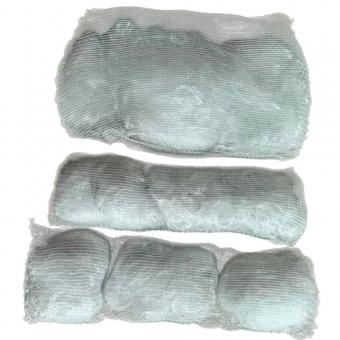
A muffler packing sock and a muffler packing pillow are both contained packing formats, but they control shape and installation in different ways. A sock normally follows a tubular or sleeve-like geometry around the perforated core. A pillow is supplied as a flatter or compressed packing component that is wrapped, shaped or positioned during assembly.
For OEM purchasing, the decision should be based on the silencer geometry, required fiber charge, assembly sequence and the amount of preparation that should remain at the customer’s production line.
BSTFLEX supplies a Fiberglass Muffler Packing Sock with Woven Glass Mesh Bag and a separate Muffler Packing Pillow. The two products should not be treated as interchangeable simply because both contain packing in a prepared component.
A muffler packing sock is a flexible contained packing component formed around a tubular or sleeve-like geometry.
The BSTFLEX fiberglass version uses:
The outer woven glass mesh keeps the fiberglass yarn organized during handling and installation. The mesh is part of the contained component and should be distinguished from a separate stainless steel retaining screen.
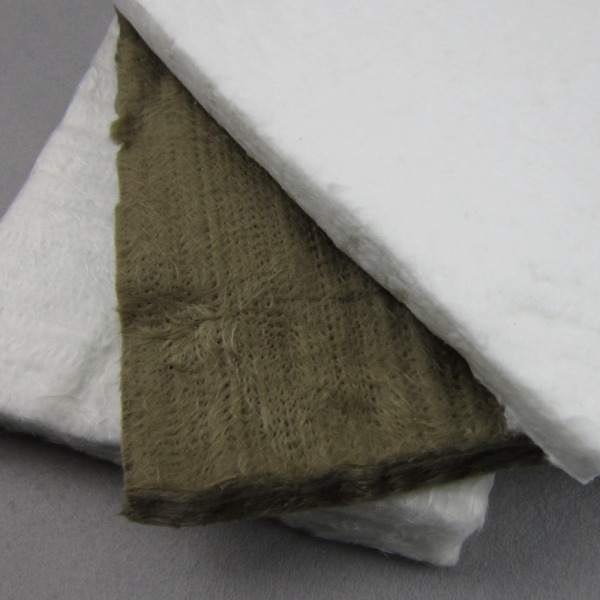
A muffler packing pillow is a contained or compressed packing component supplied in a flatter form before installation.
Depending on the approved construction, the pillow may be:
The term pillow describes the physical supply format. It does not, by itself, define whether the internal material is fiberglass, basalt, ceramic fiber or another approved packing material.
Always identify the actual material and filling weight separately on the purchasing specification.
| Purchasing Question | Muffler Packing Sock | Muffler Packing Pillow |
|---|---|---|
| Typical supplied shape | Tubular, sleeve-like or flexible bag around a defined diameter. | Flat, compressed or formed packing component. |
| Main dimensional controls | Inside diameter, outside diameter where relevant, length and filling weight. | Length, width, thickness, filling weight and final wrapped or installed shape. |
| Containment | Outer mesh or fabric bag typically surrounds the filling. | Contained or compressed construction depending on the approved design. |
| Assembly route | Usually positioned around or over a defined core geometry. | Usually wrapped, shaped or placed during assembly. |
| Best suited to | Repeat tubular geometries and controlled core dimensions. | Projects where a flatter component simplifies wrapping or insertion. |
| Primary OEM control | Diameter, length, filling weight and cover construction. | Cut dimensions, filling weight, supplied thickness and wrapping layout. |
The first question should not be which format is easier to buy. It should be which geometry produces the most repeatable assembly.
A silencer packing sock is worth evaluating when the perforated core has a repeatable cylindrical geometry and the contained component can be positioned around it without extensive reshaping.
Provide:
Do not select the sock ID only from the nominal core diameter. Account for any metallic core wrap or additional inner layer included in the approved assembly.
An exhaust packing pillow may be more practical when the material is wrapped around the core or shaped during installation.
Useful dimensions include:
A pillow can also be useful where one flat component needs to accommodate a range of related core diameters, provided the approved filling quantity and installation method remain controlled.
A sock and pillow use different dimensional systems.
For a sock, the critical geometry is usually based around a diameter or circumference.
For a pillow, the critical dimensions are usually the flat width, length and supplied thickness before wrapping.
These values should not be converted directly without considering the component construction and overlap.
For a simple circular core:
Core circumference = π × core outside diameter.
This can provide a starting geometric reference for a pillow wrap, but the final pillow width or wrapping dimension must also include the approved overlap, compression and installation allowance.
For a sock, the finished diameter should instead be confirmed against the actual core and any inner metallic layer.
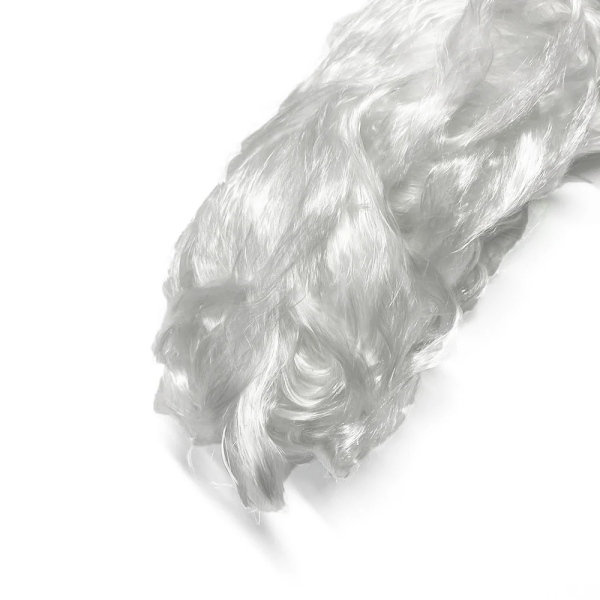
A contained product can look full while still containing the wrong quantity of acoustic material.
For both formats, distinguish:
The main acoustic filling should remain a measurable specification.
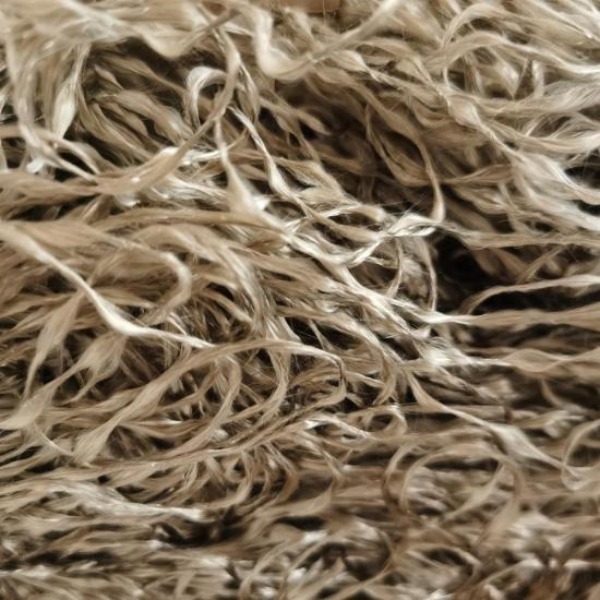
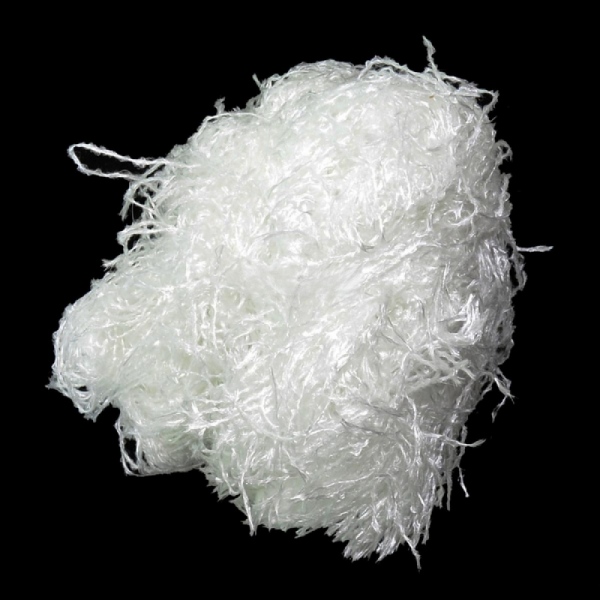
For the BSTFLEX fiberglass sock, the fiberglass yarn filling should be distinguished from the woven fiberglass mesh bag. A finished sock weight therefore should not automatically be treated as the fiber-only weight.
The same principle applies to a pillow. If the pillow contains a cover, adhesive strip, support layer or other component, those items add mass without increasing the acoustic fiber charge.
Where an approved dry fiber charge already exists, use it as the basis for comparing sock and pillow formats.
If the current silencer requires 300 g of an approved acoustic fiber, for example, the development question becomes:
Can the sock or pillow deliver the approved 300 g charge in the required geometry and assembly process?
The number is an example only. It is not a BSTFLEX standard filling weight.
Do not reduce the filling charge simply because a contained product looks thicker or more organized than loose fiber.
For repeat OEM supply, a fiberglass muffler packing sock drawing may include:
State how diameter is measured. A soft uncompressed component can give different results depending on whether it is measured flat, opened, lightly supported or installed over a mandrel.
For repeat production, a go/no-go mandrel or agreed measuring fixture may be more meaningful than trying to measure a flexible sock with calipers alone.
For a muffler packing pillow, distinguish the supplied dimensions from the installed envelope.
The drawing may include:
Do not compare a relaxed pillow thickness with the installed radial thickness around the core. They represent different conditions.
If the pillow requires wrapping, show the orientation on the operator instruction so the long and short dimensions are not reversed.
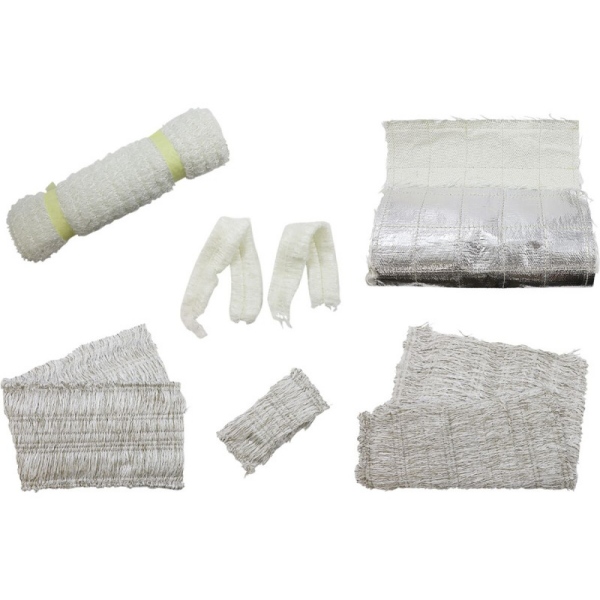
A tubular component may fit the main perforated section but fail to pass over an end feature, flare, welded fitting or larger collar.
For a sock-style component, provide:
Do not size the sock only from the final installed diameter if it must pass over a larger feature during assembly.
A pillow may fit around the core but still create an assembly problem when the wrapped core is inserted into the muffler shell.
During sample development, check:
If the pillow repeatedly bunches or folds during insertion, review the cut dimensions and wrapping method rather than simply removing additional packing.
Both sock and pillow formats can be compressed during assembly.
The specification should distinguish:
Do not describe a normal packing sock or pillow as self-expanding unless the specific product has a defined heat-release or recovery mechanism.
BSTFLEX separately supplies an Expanding Exhaust Packing Sheet. Its heat-release mechanism should not be applied to every contained packing product.
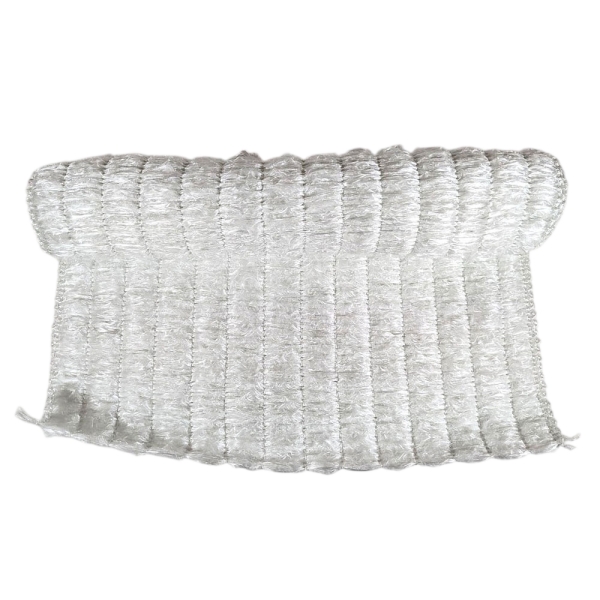
A sock can move more measuring and fiber containment work to the supplier. A pillow can provide a simple flat component while retaining flexibility during wrapping.
Compare the complete assembly process:
| Process Step | Sock | Pillow |
|---|---|---|
| Fiber weighing | Can be completed by supplier when filling weight is specified. | Can be completed by supplier when filling weight is specified. |
| Fiber containment | Typically already provided by the outer mesh bag. | Depends on pillow construction. |
| Cutting at assembly line | Usually unnecessary when correct length is supplied. | May be unnecessary for a part-specific pillow; universal pillows may require adjustment. |
| Forming around core | Limited when sock geometry already matches the core. | Normally requires wrapping or shaping. |
| Orientation control | Diameter and length are primary controls. | Length, width, wrapping direction and seam position are primary controls. |
| Incoming inspection | Dimensions, fiber weight, mesh and finished component weight. | Flat dimensions, fiber weight, thickness and supplied construction. |
Use actual production trials to compare assembly time and rework. Do not claim a fixed labor-saving percentage without measuring the customer's process.
A product family containing several core diameters may require multiple sock sizes because tubular fit is directly related to diameter.
A pillow format may sometimes cover several related geometries through controlled wrapping, but that does not make it universally interchangeable.
For each silencer model, confirm:
If one pillow or sock is intended to serve several models, identify the approved range on the technical record rather than using a general “universal” claim.
Both formats can be supplied as production components or packaged replacement parts.
Possible packaging requirements include:
Do not place unverified temperature, sound reduction, service-life or fitment claims on the package.
BSTFLEX can review custom packaging, labels and repeat-order requirements through the OEM Muffler Packing Manufacturing Service.
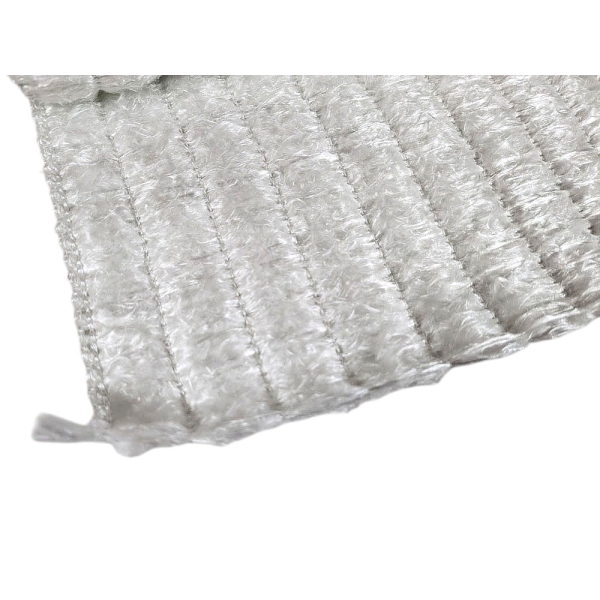
| Inspection Item | Packing Sock | Packing Pillow |
|---|---|---|
| Material identity | Filling fiber and outer mesh specification. | Filling material and containing construction. |
| Dimensions | Diameter, length and finished envelope where specified. | Flat length, width and thickness. |
| Weight | Fiber-only and/or finished component weight. | Fiber-only and/or finished component weight. |
| Closure | End closure, seam or mesh condition. | Seam, adhesive flap, stitching or other approved closure. |
| Fit reference | Approved core size or drawing number. | Approved silencer or wrapping layout. |
| Packaging | Correct label, quantity and lot identification. | Correct label, quantity and lot identification. |
Agree measurement methods and tolerances during sample approval. A flexible packing component should not be rejected using a measurement method that differs from the approved inspection method.
For an OEM trial, record:
If changing from a pillow to a sock, keep other variables consistent where practical. If the filling material also changes, record that as a separate design change.
A cleaner or faster installation does not by itself prove equivalent acoustic performance. Fit, retention and complete-silencer performance should all be evaluated.
| RFQ Field | Information to Provide |
|---|---|
| Application | Motorcycle, ATV, UTV, automotive, racing or industrial silencer. |
| Current format | Sock, pillow, mat, loose fill or existing sample. |
| Core dimensions | Outside diameter, enlarged fittings and effective packed length. |
| Shell dimensions | Internal diameter or profile and insertion route. |
| Filling material | Approved fiber family and construction. |
| Fiber charge | Target dry filling weight or development requirement. |
| Sock requirement | Diameter, length, mesh specification and closure. |
| Pillow requirement | Flat length, width, thickness, seam and wrapping direction. |
| Packaging | Individual bag, label, barcode, private label and carton quantity. |
| Volume | Prototype quantity and expected production demand. |
Neither format is universally better. A sock is useful when a tubular geometry matches the core and a controlled contained component is desired. A pillow can provide more flexibility for wrapping and fitting different approved geometries.
Not necessarily. Compare the approved dry fiber weight, not the outside appearance or supply format.
Matching fiber weight is only one control. The contained geometry, distribution and installed fit also change. Validate the new format in the actual silencer before repeat production.
BSTFLEX can supply fiberglass packing socks in customized diameters, lengths, filling weights, packing densities and packaging formats for suitable projects.
Custom pillow dimensions and filling requirements can be reviewed according to the silencer drawing, approved material and expected production quantity.
For a tubular fiberglass contained component, start with the BSTFLEX Fiberglass Muffler Packing Sock with Woven Glass Mesh Bag.
For a pillow-format component, review the BSTFLEX Muffler Packing Pillow.
Other muffler packing materials and contained packing formats are available when the silencer requires a different construction.
Send the core dimensions, packed length, fiber requirement, target filling weight, preferred format and annual quantity so the sample can be developed around the actual assembly.
Request Muffler Packing Sock or Pillow Samples and an OEM Quote

No.10, Chuangxin North Road, Nanshan Park, Ningguo Economic and Technological Development Zone, Ningguo City, Anhui Province, China
teléfono/Whatsapp : 0086-15856303740
Email : sales@bstbraidedsleeve.com
Skype : vanesa-cheng