Qué buscas?
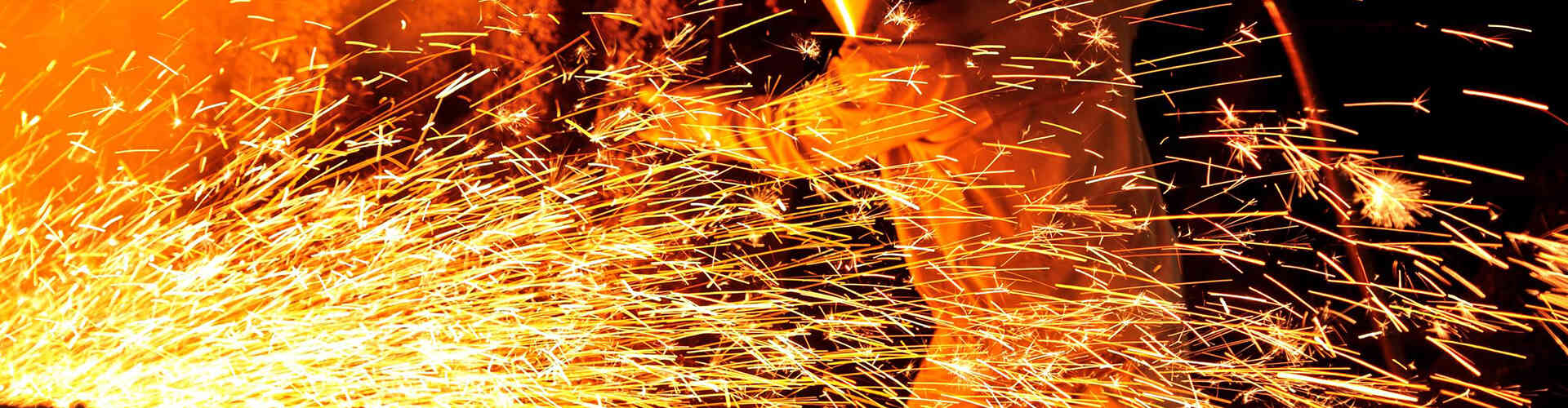
A barrera térmica autoadhesiva Es ideal cuando se necesita una instalación rápida sobre una superficie limpia y estable y se desea una solución limpia y discreta. Se utiliza comúnmente como... barrera térmica de aluminio Lámina para reducir la exposición al calor radiante en paneles, mamparos, recintos y superficies seleccionadas del compartimiento del motor, especialmente donde los sujetadores mecánicos son difíciles o indeseables.
Esta guía explica cuándo un adhesivo en la parte posterior lámina de barrera térmica es la elección correcta, qué condiciones de instalación la hacen tener éxito (o fracasar) y cómo seleccionar la mejor estructura para mayor durabilidad.
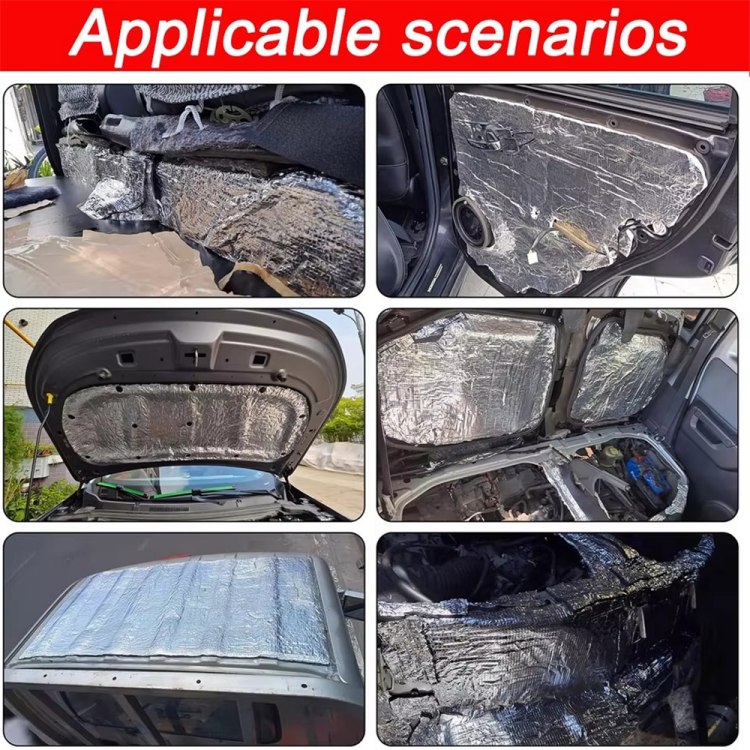
A Lámina autoadhesiva de barrera térmica es un lámina de barrera térmica Con un reverso adhesivo sensible a la presión (PSA) que permite aplicar la barrera directamente sobre una superficie. Muchos diseños utilizan una capa de aluminio para reflejar el calor radiante, por lo que los productos con reverso adhesivo a menudo se describen como... barrera térmica de aluminio .
En aplicaciones del mundo real, el rendimiento depende de tres factores: (1) modo de calor (radiante vs. contacto), (2) preparación de la superficie y (3) si el sistema adhesivo se mantiene dentro de sus límites de temperatura y ambiente.
Si desea una solución rápida sin taladrar agujeros ni añadir soportes, una barrera térmica autoadhesiva Suele ser la primera opción. Es ideal por su apariencia de OEM, su rápido montaje y su repetibilidad en la instalación.
Las barreras adhesivas funcionan mejor en metales limpios y superficies pintadas estables. Si la superficie es rugosa, aceitosa o está expuesta constantemente a salpicaduras, podría necesitar una estrategia de montaje diferente o una construcción más robusta.
Un reflexivo barrera térmica de aluminio Funciona mejor contra el calor radiante cuando puede ver la fuente de calor a través de un espacio de aire. Si la barrera se presiona con fuerza contra una pieza extremadamente caliente, la transferencia de calor predominante se convierte en conducción y el rendimiento del adhesivo puede verse reducido.
Para embalajes ajustados, un adhesivo lámina de barrera térmica Puede añadir protección sin necesidad de usar fijaciones voluminosas ni aislamiento grueso. Esto es común en paneles y gabinetes ubicados cerca de corrientes de aire caliente o puntos calientes radiantes.
Para conocer las estructuras y opciones disponibles, consulte: Láminas de barrera térmica y materiales de barrera térmica autoadhesivos .
Una barrera térmica autoadhesiva es una lámina de barrera térmica con respaldo adhesivo diseñada para una instalación rápida en superficies estables para reducir la exposición al calor radiante.
No. La "barrera térmica de aluminio" describe el revestimiento reflectante. Puede ser adhesiva o de instalación mecánica, según la estructura del producto.
Las razones más comunes son una preparación deficiente de la superficie, exposición a aceite o salpicaduras más allá del diseño del adhesivo, levantamiento de los bordes por el flujo de aire o la vibración o el uso de la lámina en zonas de calor extremo de contacto directo.
Sí. El blindaje radiante funciona mejor con un espacio de aire. Si la vibración causa contacto, trátelo como calor por contacto y mejore la retención o elija un sistema diferente.
Comparta fotos de su área de instalación, la ubicación de la fuente de calor, el tipo de sustrato y la cobertura requerida. Le recomendaremos la solución adecuada. barrera térmica autoadhesiva estructurar y proporcionar una cotización rápida.

No.10, Chuangxin North Road, Nanshan Park, Ningguo Economic and Technological Development Zone, Ningguo City, Anhui Province, China
teléfono/Whatsapp : 0086-15856303740
Email : sales@bstbraidedsleeve.com
Skype : vanesa-cheng