Qué buscas?
Un tubo de escape caliente puede generar un problema térmico mucho mayor de lo que sugiere su diámetro.
En un vehículo, un compartimento de generador, una sala de máquinas marina o una máquina industrial, el tubo puede discurrir a escasos centímetros del cableado eléctrico, las mangueras hidráulicas, las líneas de combustible, los paneles de la carrocería, los sensores o las zonas de servicio. Una vez que el sistema de escape alcanza su temperatura de funcionamiento, esa pequeña distancia puede convertirse en el punto crítico de todo el diseño térmico.
Aquí es dondeAislamiento del tubo de escapese vuelve necesario.
El sistema de aislamiento adecuado hace más que simplemente cubrir una tubería caliente. Debe controlar el calor y, al mismo tiempo, resistir vibraciones, ciclos térmicos repetidos, contaminación, movimiento y mantenimiento.
Por este motivo, elegir el aislamiento basándose únicamente en su clasificación de temperatura rara vez es suficiente.
BSTFLEX desarrollaAislamiento del escudo térmico del escapePara sistemas de escape de automóviles, diésel, embarcaciones, generadores e industria, incluyendo mantas aislantes para tuberías, aislamiento térmico, envolturas térmicas, manguitos flexibles y barreras térmicas metálicas.
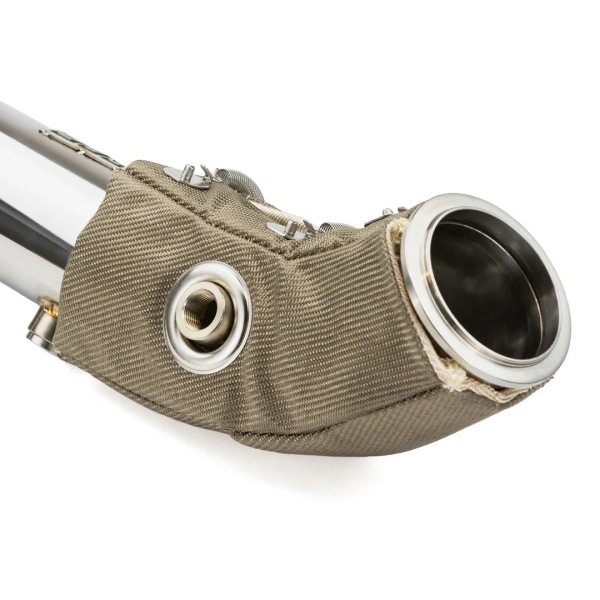
Antes de seleccionar un material aislante, determine qué problema necesita resolverse.
Un tubo de escape puede necesitar aislamiento porque:
Un mazo de cables cercano se está sobrecalentando;
La temperatura del recinto es demasiado alta;
Los operarios están expuestos a superficies calientes;
El calor está llegando a una línea de combustible o hidráulica;
El piso de un vehículo está recibiendo un calor radiante excesivo;
La sala de máquinas tiene ventilación insuficiente;
El tubo de escape debe retener más calor aguas abajo;
Los equipos circundantes no pueden soportar la temperatura actual.
Son problemas diferentes.
Pueden requerir sistemas de aislamiento diferentes incluso cuando la temperatura del tubo de escape sea idéntica.
Por ejemplo, para proteger el piso de un vehículo del calor radiante, puede ser conveniente utilizar un escudo reflectante, mientras que para reducir la temperatura de la superficie externa del tubo de escape de un generador, puede ser necesario un grueso aislante extraíble.
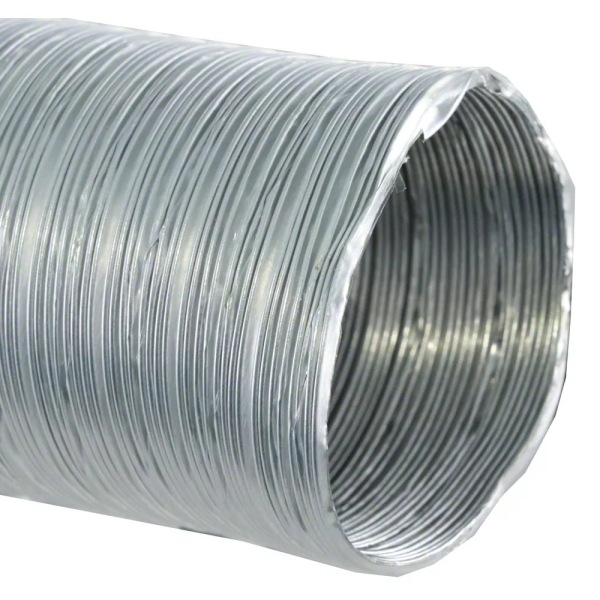
El aislamiento de los tubos de escape generalmente se divide en cuatro categorías prácticas.
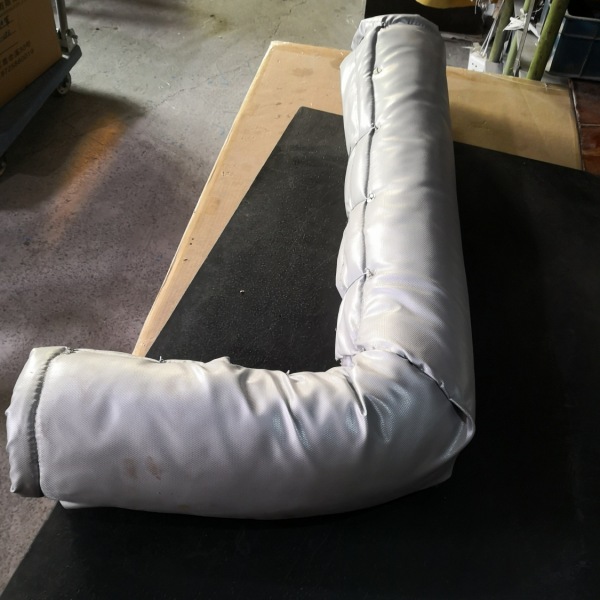
Se fabrica una manta extraíble para que se ajuste a un diámetro de tubería o geometría de escape específicos.
Normalmente contiene:
una capa interna resistente al calor;
aislamiento térmico;
una capa protectora externa;
fijación mecánica.
Esta construcción es especialmente adecuada cuando el acceso para el mantenimiento es importante.
Las instalaciones típicas incluyen:
generadores diésel;
motores marinos;
motores industriales;
tubos de escape grandes;
silenciadores;
codos de escape.
La manta se puede fabricar en varias secciones en lugar de una sola pieza larga, lo que permite a los técnicos retirar solo la sección necesaria para la inspección.
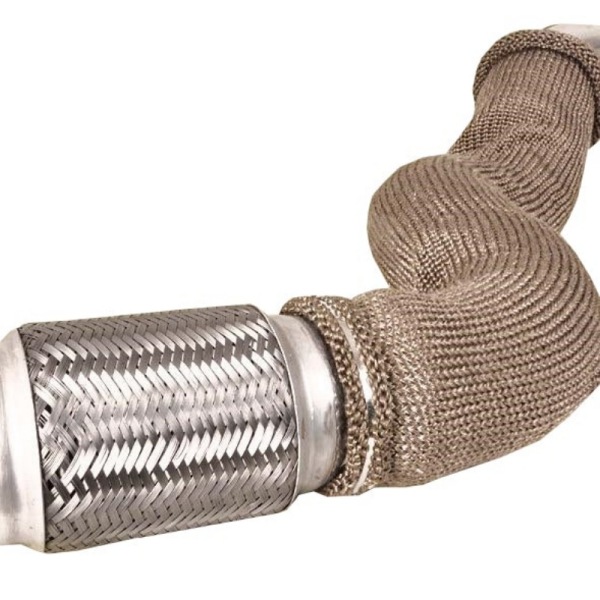
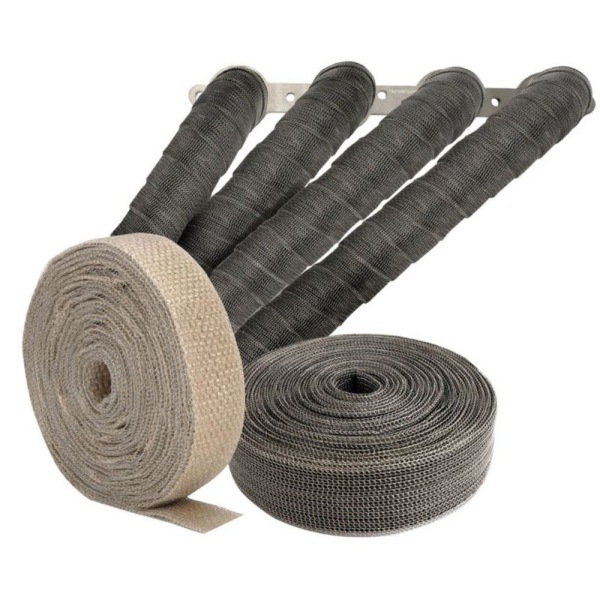
La cinta aislante para escapes se suministra en rollos y se enrolla en espiral alrededor del tubo.
Se utiliza ampliamente para:
cabezales de automóviles;
motocicletas;
sistemas de escape de alto rendimiento;
tubos de escape de pequeño diámetro;
Fabricación de sistemas de escape a medida.
Suministros BSTFLEXAislamiento térmico para escape y colectoren diferentes estructuras de fibra de alta temperatura.
El aislamiento termoadhesivo proporciona una forma sencilla de aislar superficies tubulares largas, pero resulta menos práctico cuando es necesario abrir el sistema de escape con regularidad para su mantenimiento.
Algunas líneas de escape requieren una solución tipo manguito en lugar de una manta fabricada a medida.
Se puede instalar un aislamiento flexible sobre tubos de escape más pequeños, donde el diámetro y la geometría son relativamente sencillos.
Por ejemplo, el BSTFLEXAislamiento térmico para el escape de calentadores diéselEstá diseñado para tuberías de escape compactas utilizadas en aplicaciones como sistemas de calefacción diésel.
Las soluciones de manguitos y aislamiento pueden ser particularmente útiles cuando:
El espacio de instalación es limitado;
La tubería es relativamente pequeña;
Se requiere cobertura continua;
Sería difícil instalar un escudo rígido.
Un protector metálico no necesariamente toca la tubería.
En cambio, suele instalarse con una separación controlada entre el escudo y la fuente de calor.
Esta disposición resulta especialmente eficaz para reducir el calor radiante hacia los componentes cercanos.
Los materiales comunes incluyen:
aluminio;
acero inoxidable;
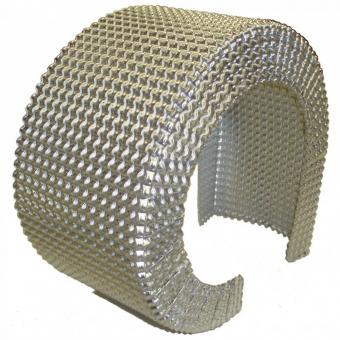
acero inoxidable repujado;
aleaciones de níquel.
Un escudo térmico metálico puede ser preferible cuando:
El espesor de la instalación debe mantenerse bajo;
La resistencia al impacto mecánico es importante;
El escudo debe conservar una forma específica;
El calor radiante es la principal preocupación.
Para entornos severos, BSTFLEX también fabricaProtector térmico de aleación Inconel 625componentes.
Estos términos se utilizan a menudo indistintamente, pero su función en ingeniería puede diferir.
Aislamiento del tubo de escapeNormalmente, rodea la tubería y limita la transferencia de calor a través de una capa aislante.
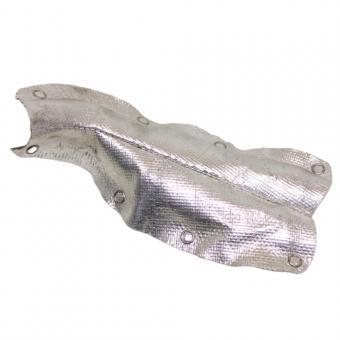
Unprotector térmico del tubo de escapeNormalmente se sitúa entre la tubería y el componente que necesita protección.
Uno contiene calor.
El otro lo bloquea o lo redirige.
En algunos sistemas de escape, se utilizan ambos.
Un motor diésel puede tener una manta aislante extraíble alrededor del tubo de escape, mientras que un escudo de acero inoxidable protege una caja eléctrica cercana.
That combination can provide better thermal control than either solution alone.
Material selection should begin with continuous operating conditions.
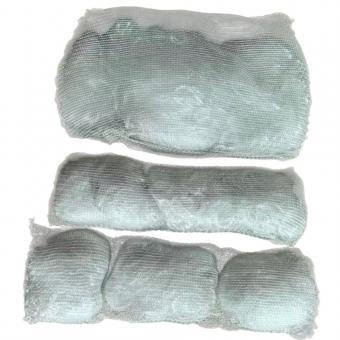
Fiberglass is one of the most widely used materials for exhaust insulation.
Advantages include:
flexibility;
good thermal resistance;
availability in many constructions;
practical manufacturing cost.
Fiberglass can be used in:
blankets;
tapes;
wraps;
sleeves;
composite heat shields.
It is often suitable for moderate and high-temperature exhaust applications where extreme temperature exposure is not continuous.
High silica material is selected when higher heat resistance is required.
It may be used as:
outer fabric;
inner hot-side layer;
insulation textile;
heat-resistant wrap.
Silica constructions are useful around:
turbocharged exhaust systems;
manifolds;
high-output diesel engines;
industrial exhaust equipment.
Basalt-based materials are frequently used in automotive and performance exhaust insulation.
They offer:
flexible installation;
strong heat resistance;
good compatibility with wrapped exhaust tubes.
Basalt is often seen in heat wrap and shaped blanket applications.
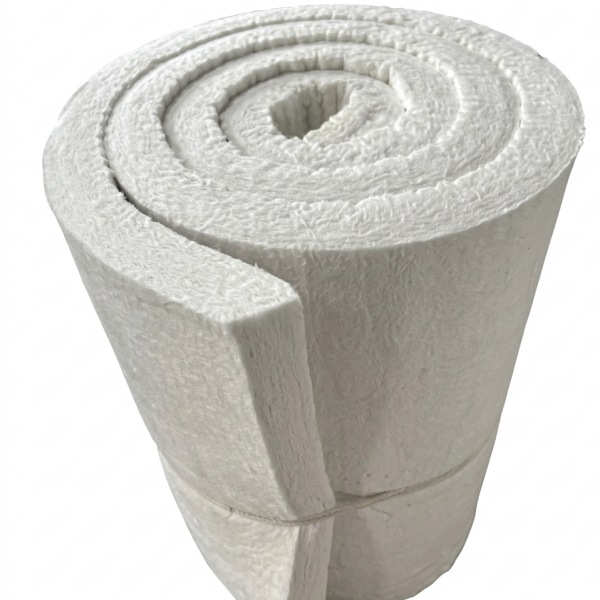
Where a greater temperature reduction is required within limited space, high-temperature insulation cores may be used.
These materials are normally enclosed within:
fiberglass fabric;
silica fabric;
stainless steel foil;
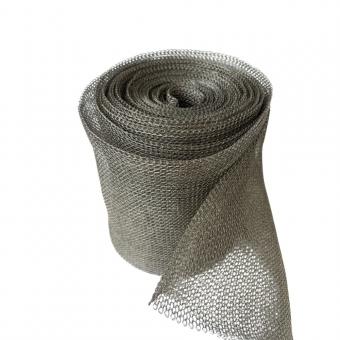
stainless steel mesh.
The insulation core should not be evaluated separately from the blanket construction.
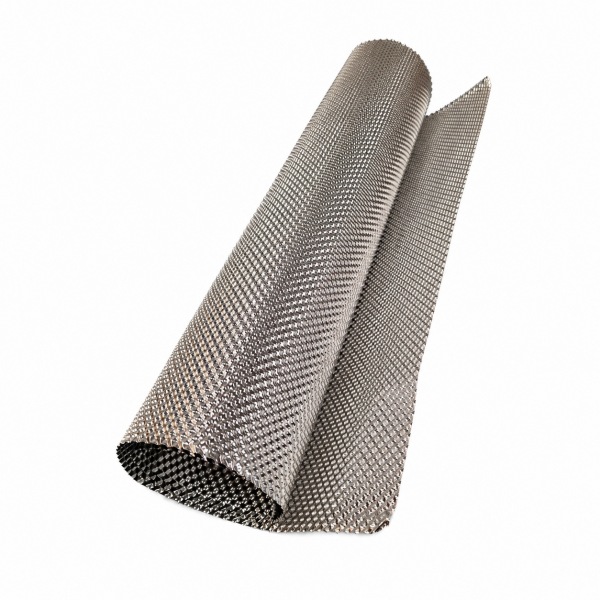
Aluminum is primarily used as a reflective surface rather than a thick insulation medium.
Its low weight makes it particularly suitable for:
automotive underbody protection;
exhaust pipe heat shields;
muffler shields;
vehicle floor insulation.
Stainless steel is preferred where the exhaust heat shield also requires mechanical strength.
It performs well in applications exposed to:
vibration;
road debris;
repeated thermal cycling;
higher temperatures.
Nickel alloys such as Alloy 625 are reserved for demanding environments where temperature, oxidation and corrosion requirements exceed the limits of conventional sheet metals.
A thicker insulation layer generally reduces heat transfer more effectively, but this does not mean the thickest available blanket is automatically the best design.
Increasing thickness can create problems with:
component clearance;
mounting brackets;
adjacent pipe routing;
sensor access;
engine compartment packaging.
In tightly packaged automotive systems, only a few millimeters of space may be available.
In a large generator enclosure, considerably thicker insulation may be practical.
The correct insulation thickness should therefore balance thermal performance with installation geometry.
Diesel exhaust pipes frequently operate for long periods under load.
Heat containment becomes especially important in:
trucks;
construction equipment;
agricultural machinery;
industrial engines;
stationary power systems.
A removablediesel exhaust pipe insulationsystem can reduce heat released into the surrounding engine compartment while still allowing service access.
Generator exhaust piping often runs through compact acoustic enclosures.
This creates a concentrated heat source close to:
electrical cabinets;
acoustic materials;
engine components;
service areas.
A generator exhaust insulation system commonly uses removable sections around pipes, elbows and silencers.
This also allows the insulation to be removed during maintenance without replacing the entire system.
Marine exhaust systems present additional concerns including:
limited ventilation;
moisture;
salt exposure;
vibration;
restricted service space.
For dry marine exhaust systems, segmented blankets are often preferred because they allow easy access to flanges and exhaust connections.
Passenger and performance vehicles use exhaust insulation for:
headers;
downpipes;
catalytic converters;
center exhaust pipes;
mufflers.
Depending on available space, solutions may include:
wrap;
shaped blanket;
metal shield;
reflective barrier.
Industrial engines and machinery may use large-diameter exhaust lines that require customized blanket sections.
These applications often place greater importance on:
durability;
repeatable installation;
service access;
identification of individual insulation sections.
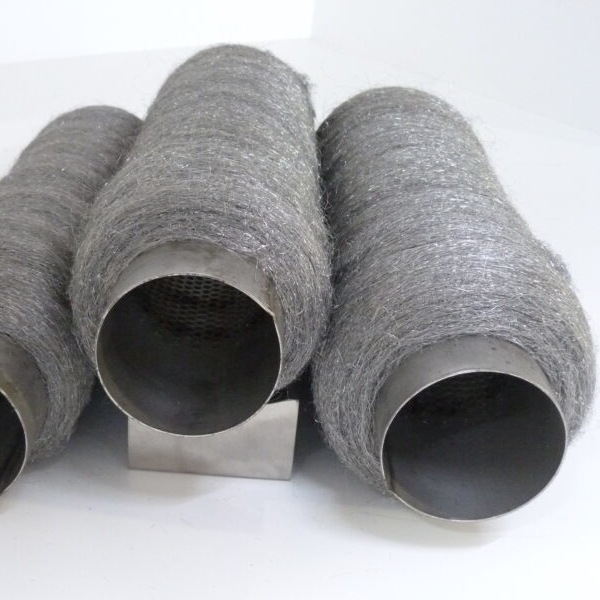
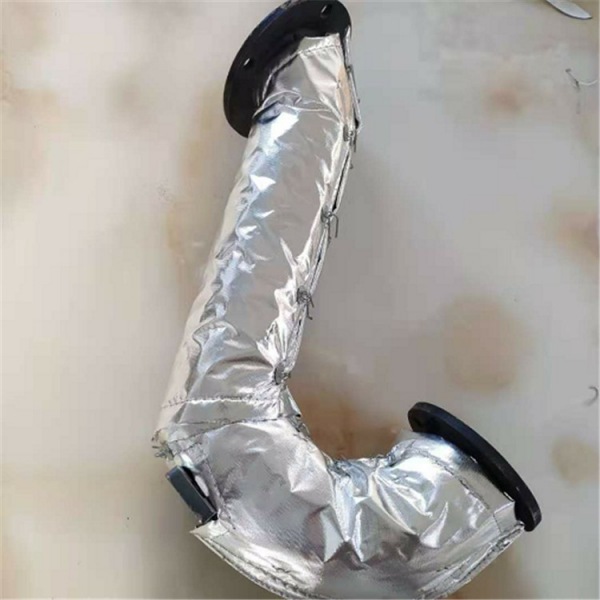
A bend is often more difficult to insulate than a straight pipe.
Wrap can follow gradual bends, but large industrial elbows may benefit from a fitted insulation blanket.
The BSTFLEXThermal Insulation Elbow Blanketis designed for curved exhaust geometry where a standard flat insulation section cannot maintain consistent coverage.
A well-designed elbow blanket should consider:
bend radius;
flange position;
pipe diameter;
seam location;
fastener access.
One of the most common weaknesses in an exhaust insulation system is the flange area.
A thick blanket may work well on the pipe but leave a large exposed metal flange.
That exposed section can become a strong local heat source.
For higher-performance systems, insulation should therefore be designed around:
flange diameter;
bolt access;
connection points;
sensors;
expansion joints.
A removable flap or separate flange blanket may be used where regular access is required.
For serious OEM projects, saying “we need exhaust insulation” is not enough.
A better specification is:
exhaust pipe operating temperature;
ambient temperature;
pipe diameter;
required outer surface temperature;
insulation thickness limit;
airflow condition.
This allows the insulation design to be evaluated against a measurable target.
Without these conditions, it is difficult to compare two insulation systems accurately.
Maintenance requirements are particularly important for:
marine engines;
generators;
mining equipment;
construction machinery;
industrial engines.
If technicians need frequent access to exhaust joints or engine components, permanent wrap can create additional maintenance work.
A removable blanket is usually more practical in these situations.
A segmented system may be designed so that:
each section has an identification mark;
only the required section is removed;
the blanket can be reinstalled after inspection.
This reduces disruption during service.
A high published temperature rating does not guarantee that the complete insulation system will perform correctly.
The full assembly must be considered.
An insulation material that performs well in a laboratory may fail quickly if it rubs continuously against a bracket or neighboring component.
Insulation should not prevent access to:
sensors;
clamps;
inspection ports;
flange bolts.
An exhaust system may need different thermal solutions in different areas.
For example:
manifold: shaped blanket;
straight pipe: wrap;
elbow: removable blanket;
muffler: metal shield.
The outer layer must suit the operating environment, not just the temperature.
Instead of selecting exhaust insulation by material name, use the following sequence.
For a simple tubular pipe:
Consider exhaust wrap or sleeve insulation.
For a pipe that requires regular inspection:
Use a removable pipe insulation blanket.
For an irregular elbow or flange:
Use a custom shaped blanket.
For protecting a nearby panel from radiant heat:
Use a metal or reflective heat shield.
For extreme heat and demanding environments:
Evaluate high-silica, high-temperature fiber, stainless steel or nickel-alloy constructions.
This approach is more reliable than choosing one product type for the complete exhaust system.
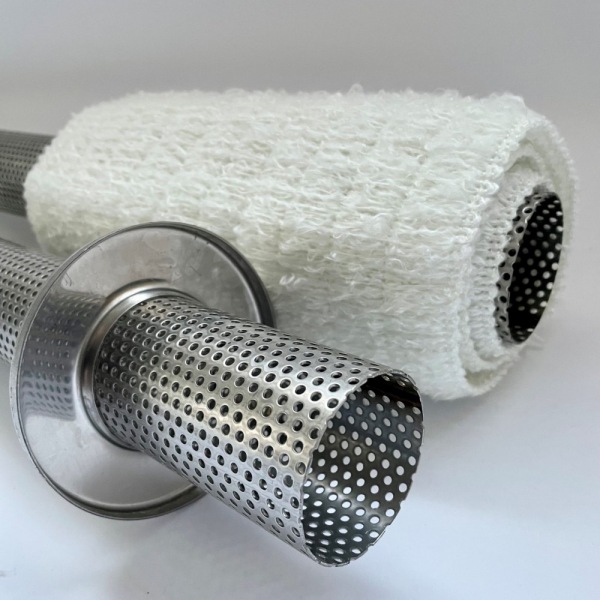
For accurate design and quotation, provide:
Pipe dimensions
outside diameter;
overall insulated length;
bend radius;
flange dimensions.
Temperature
normal operating temperature;
maximum temperature.
Installation environment
automotive;
marine;
generator;
industrial;
outdoor;
enclosed.
Service requirement
removable;
permanent;
frequency of maintenance.
Performance requirement
target external temperature;
maximum insulation thickness.
Project information
sample or drawing;
prototype quantity;
expected production volume.
The more complete the input data, the easier it is to design an insulation system that fits correctly from the first prototype.
Exhaust pipe insulation is worth considering whenever an exhaust line creates unacceptable heat exposure for the surrounding system.
The decision should be driven by actual conditions rather than by appearance.
If the objective is to lower heat around the pipe, protect surrounding components or create a safer service environment, an insulation blanket, wrap, sleeve or heat shield may be appropriate.
For applications involving multiple exhaust components, the best result often comes from combining several insulation methods.
BSTFLEX manufacturesexhaust heat shield insulation, removable blankets, exhaust wraps, lagging and custom metal heat shields for automotive, marine, diesel, generator and industrial exhaust systems.
Para un aislamiento personalizado de tuberías de escape, indique las dimensiones de la tubería, la temperatura de funcionamiento, el entorno de instalación y la cantidad necesaria. De esta forma, se podrá seleccionar un diseño de aislamiento adecuado para el sistema de escape específico, en lugar de basarse en una clasificación de temperatura genérica.

No.10, Chuangxin North Road, Nanshan Park, Ningguo Economic and Technological Development Zone, Ningguo City, Anhui Province, China
teléfono/Whatsapp : 0086-15856303740
Email : sales@bstbraidedsleeve.com
Skype : vanesa-cheng